Who’s got our back? The surprising ways politics affects women’s health
From the cost of HRT to IVF access and heart disease research, political decisions shape every aspect of women’s healthcare. But when policies ignore us, who’s left to fight for our health?
Close your eyes (after you’ve read the next bit, obvs) and tell me what comes to mind when I say the word: “Health”.
I betcha it’s an image of someone in a white coat. Mebbes with a stethoscope around their neck. George Clooney if you’re that way inclined…
Someone businessy in a suit (or with an incredibly sharp bob) will probably be the last thing you think of. But politicians have a huge amount of power over women’s health, from the price of medications to how our health crises are handled – or aren’t, in the case of HRT shortages.
Politics shapes how we access healthcare, how much it costs, what issues deserve research and most importantly, who gets the money. And that defines the healthcare women get.
Want to know how deeply political policies influence our well-being – often in ways we don’t even realise? Keep reading…
The cost of essential products and services
To begin with, a word that gives most of us the ick: menstruation. Well, menstrual products, to be precise. For years, these essentials were considered “luxury” items in many countries and so were taxed as highly as other non-essential goods – like crisps, but not edible cake products. Yup, edible cake products were taxed at lower rates of VAT than tampons and sanitary towels.
Westminster abolished the tampon tax in 2021, but only after decades of women shouting about it. This was a tax that unfairly penalised women for their biology and studies showed one-third of UK girls aged 14 to 21 had at some point struggled to afford sanitary products. This is policy-driven period poverty that treats women’s health needs as optional.
Meanwhile, it took a fight – of which I was part – to highlight the high price of hormone replacement therapy (HRT) in England. For many people, HRT has to consist of two medications: oestrogen, which is needed to combat menopause symptoms, and progesterone, which is essential to keep your womb safe and reduce any risk of endometrial cancer. So women got charged two prescriptions – often even when the HRT came in the same pack. Women were paying over £200 a year for the HRT they needed just to get through the day before campaigners successfully got it reduced to one payment a year (still too much, if you ask me…).
The postcode lottery of fertility treatments
I know many people who have gone through IVF and just how unfair the system is. Under the NHS, access to fertility treatment is a postcode lottery: some trusts cover the full recommended three cycles of IVF, while others provide no funding for it at all. In fact, studies show 80% of women are unable to access NHS-funded IVF, which is an incredible figure when you realise having trouble conceiving affects one in seven couples in the UK. If you can’t afford private treatment, then you may have to kiss goodbye to having a biological family of your own.
Ultimately, this comes down to individual trusts deciding what gets their money – a choice based on spreadsheets that leaves a huge emotional and financial burden.
Medical research: what gets funded – and what doesn’t
I’ve written previously about how women’s healthcare is notoriously underfunded and under-researched; it’s one of the biggest ways politics shapes our health.
For example, around 90% of women suffer from pre-menstrual syndrome (PMS) and yet five times more research is done on erectile dysfunction, which affects only around 19% of men.
One researcher even said she’d had funding bids for research into PMS rejected because the reviewers didn’t believe it existed! Migraines, headaches and anorexia, which all affect women more than men, receive a fraction of the funding for male-dominant conditions. And this isn’t because the science around male anatomy is easier to treat; it’s purely where policymakers put the money.
One of the biggest disparities in funding, however, must be heart disease. This is the leading cause of death among women worldwide, but research has always focussed on men. Women are 50% more likely to be given an incorrect diagnosis following a heart attack due to differences in symptoms, yet only one-third of heart disease studies around the world focus on us..
Research funding is often decided by governmental and private institutions based on factors such as public awareness of a condition, if it has an economic impact and, at times, lobbying. That’s why erectile dysfunction receives more funding than PMS – pharmaceutical companies lobbied for it, while there was a great amount of social and economic importance placed on treating it.
Racial and financial health disparities
It’s not just gender that impacts health policies; your racial and socioeconomic status has a part to play, too. Black women in the UK are nearly four times more likely to die during pregnancy or shortly after childbirth than white women, which is often attributed to social and economic problems as well as systemic biases and racial stereotypes dating back years. The maternal death rate for Asian women, meanwhile, is two times higher.
Lower-income communities are also hit hardest when funds for mental health services are cut – and they’re often among the first to go. Mental health issues are often more prevalent in deprived communities due to stress and lack of resources and this creates a cycle of neglect. It also disproportionately affects women – we are twice as likely to suffer from depression and anxiety.
Women’s health and reproductive rights: a worldwide fight
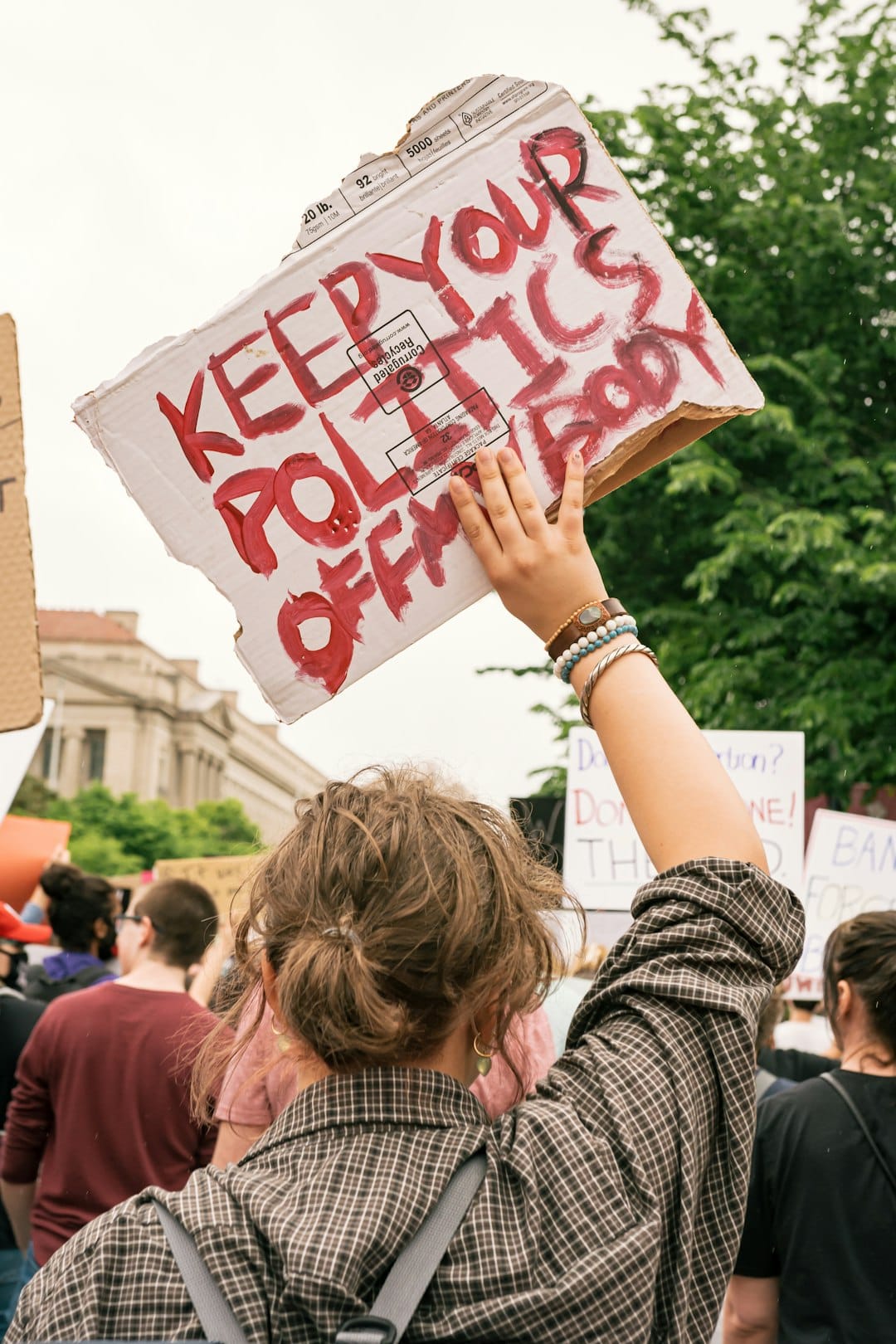
No matter where in the world you live, being able to get contraception, abortion services and fertility treatments varies wildly and that’s often because of politics and votes rather than what’s in the woman’s best interest. You only need to look at coverage for the US presidential election to see how women’s reproductive health is a political hot potato. Following the overturn of Roe vs Wade, abortion is now effectively outlawed in or tightly restricted in 21 states, forcing women to travel hundreds of miles to get the care they want – if they can afford it.
It is not only the women in those states affected: the bans are like swords of Damocles over the heads of the rest of the US’s women leaving them wondering if their politicians will be next to decide on their reproductive rights.
Some 40% of women of reproductive age live in countries with restricted access to safe abortion services. This doesn’t only prevent women from accessing essential healthcare; it also pushes women into unsafe situations. According to the World Health Organisation (WHO), around 45% of all abortions worldwide are unsafe, with more than half of them taking place in Asia. Deaths from safe abortions are negligible; deaths from unsafe abortions are high.
It’s easy to look at numbers, but remember, each number is someone’s daughter, or sister, wife, niece, lover…
Who’s got our back?
One of the reasons I became involved in politics (rather than simply ranting in the pub) is because of my work with Pausitivity. I was able to advocate for all the women affected and changed happened because of the joint voice of all the grassroots campaigners – in our #KnowYourMenopause selfies, the Make Menopause Matters petition and countless social media posts by campaigners across the country.
But we have to understand the system and be at the table to truly change how women’s healthcare is managed.
Because until women’s health is put at the centre of policy decisions, millions will continue to live with a healthcare system that doesn’t have their back. We have to make women’s healthcare a priority and elect people who will do more than pay lip service to our needs. When there’s an election, ask your candidate what they will do about women’s health; look at the work of campaigners in your area (or nationwide) and volunteer to help; write letters to your newspaper – there is a myriad of ways to get involved.
Who’s got our back? We have.
Main image: Gayatri Malhotra on Unsplash