Does your class make menopause worse?
It’s time to change the change and tackle the class divide in menopause care
One of my most-repeated messages when delivering talks is that menopause is not a one-size-fits-all experience. After all, with 34 symptoms, it’s impossible for everyone to have the same experience. But over the years, I’ve also come to realise the huge role class and money play in how we get through menopause.
It first struck me while watching Mariella Frostrup’s The Truth About… The Menopause, when she casually spoke about going to see her gynaecologist. And there she was, strolling along Harley Street to do just that, at a time of her choosing and with a specialist of her choosing.
At the time, I was living in East Kent, where there was one NHS menopause specialist for the entire area and the waiting time for an appointment was around six months. So, is it any wonder I shouted: “Mariella, pet, that’s not real life,” at the TV?
That’s why I sighed when I heard she’d been named the government’s Menopause Tsar. Don’t get me wrong: Mariella is a brilliant journalist and I’ve admired her for years – I regularly recommend her book Cracking the Menopause and I know she is passionate about making a change.
But with no lived experience of what menopause is like when you can’t, as she did last year, leave your job knowing there’ll be plenty of other offers waiting for you – or when you don’t have a menopause specialist on demand – can she truly understand what it’s like for the rest of us?
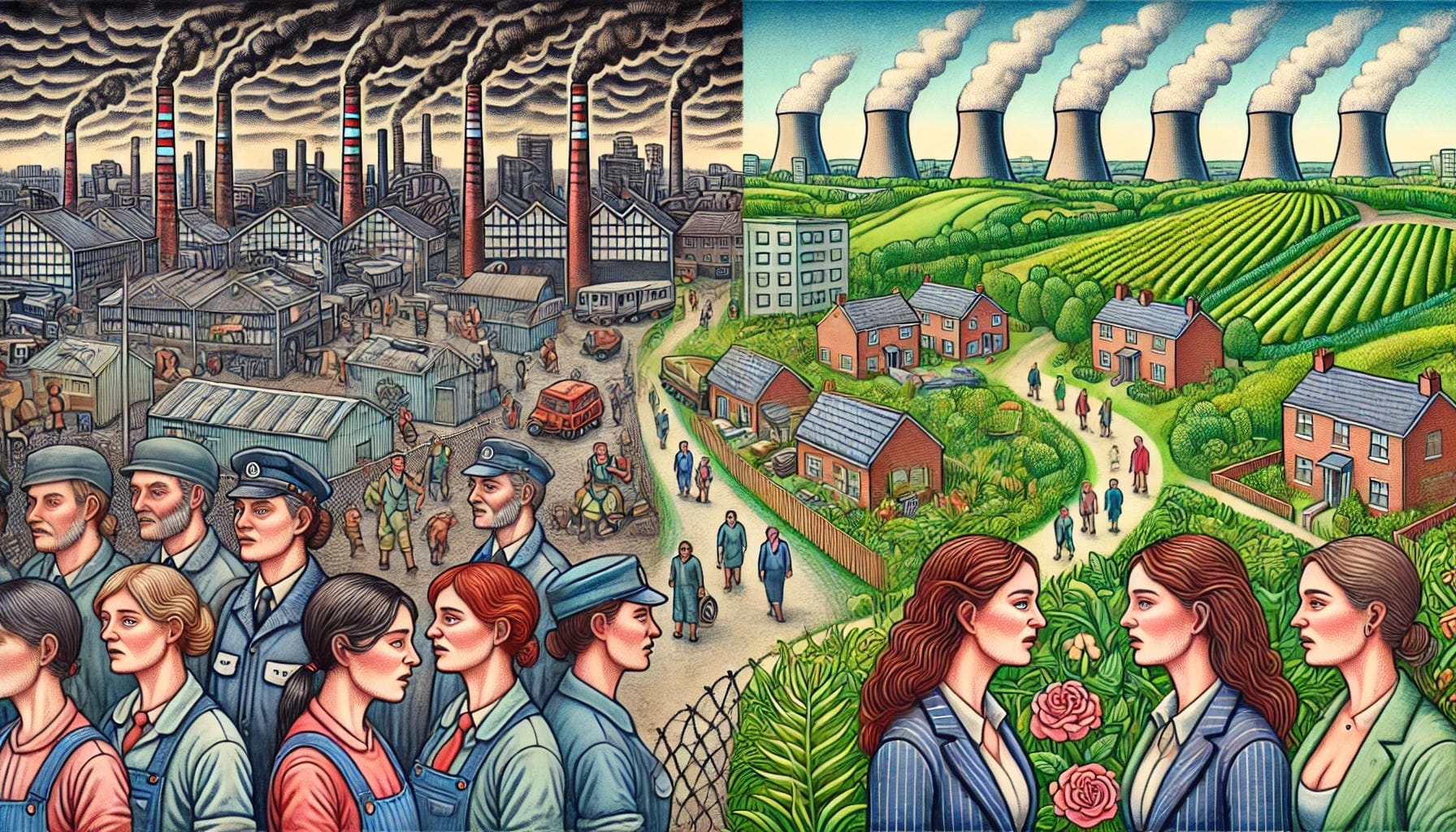
The truth is, for working-class women in the UK, menopause is made worse by the existing inequalities they have to live with and that impacts health, employment and quality of life.
Workplace Challenges
I gave a talk to Deloitte last week about menopause in the workplace and once again, the facts hit me hard: one in ten women who worked during the menopause left their job due to their symptoms. It’s a shocking statistic, you’ll agree, but it doesn’t fully capture the dilemmas and consequences of such a decision.
Working-class women are more likely to hold physically demanding jobs with rigid schedules, which makes it even harder for them to manage symptoms such as hot flushes, fatigue and brain fog. They’re also often unable to take time for medical appointments or breaks – staff in local corner shops, for example, can be alone for entire shifts – and so are left feeling they have no choice but to put up with it in silence or leave work altogether.
The physical and emotional toll of menopause can also result in reduced hours or time off work, which creates a vicious cycle: poor health worsens their financial insecurity and the financial insecurity makes their health worse.
Sadly, only 12% of menopausal women feel comfortable discussing their symptoms with their employer, which hits those in low-income roles hardest. They’re scared to speak out for fear of losing their job or being judged and that continues the cycle of invisibility and neglect.
Health Disparities
For years, I railed against the cost of hormone replacement therapy (HRT) and how expensive it worked out. Most women in England have to pay two lots of prescription charges for HRT (one for oestrogen and the other for progesterone) and when you are needing a prescription every two or three months, that adds up. Believe me, I know!
So, I was delighted when our lobbying led to the introduction of the HRT prepayment certificate, letting women pay only £19.30 for a year’s worth of HRT. But while this may seem like a small amount, it’s still a lot for those living week to week. And let’s not forget that women are notorious for putting their own financial needs behind those of their family.
Additionally, women from lower socioeconomic backgrounds are more likely to have untreated menopause symptoms due to a lack of awareness and access to healthcare. This is made worse by GP shortages and longer waiting times in deprived areas, as well as the stress of trying to live on low wages.
The Way Forward
There are three vital routes that can help us turn this situation around:
- Legislative Action We need menopause policies in workplaces similar to maternity rights. Moves have been started: the Employment Rights Bill calls for employers to have menopause action plans and to provide reasonable adjustments for their menopausal employees. However, it only applies to employers with 250 and more workers. As I said, many working-class women are employed in low-paid jobs with small workforces; they should get these protections, too.
- Affordable Healthcare The HRT prepayment certificate is a step forward but doesn’t address the fact that 10% of women aged 45-59 living in deprived areas get HRT on the NHS, compared to 18% in the least deprived. Lots of regions, particularly those with higher deprivation, lack specialist menopause clinics and there are still too many GPs without enough training. Let’s get more specialist services around the country and mandatory menopause training for healthcare providers.
- Community Education We need to forget Menopause Tsars at Westminster and turn to grassroots campaigns – yes, like Pausitivity KnowYourMenopause – and community projects. Local support groups and organisations such as libraries, community centres and faith groups can get the menopause message to those neglected by the very middle-class conversations we’re having. And they are very middle-class. We could also train local women to be menopause champions in their communities, or to host a Menopause Café for open, judgment-free conversations.
A Call to Action
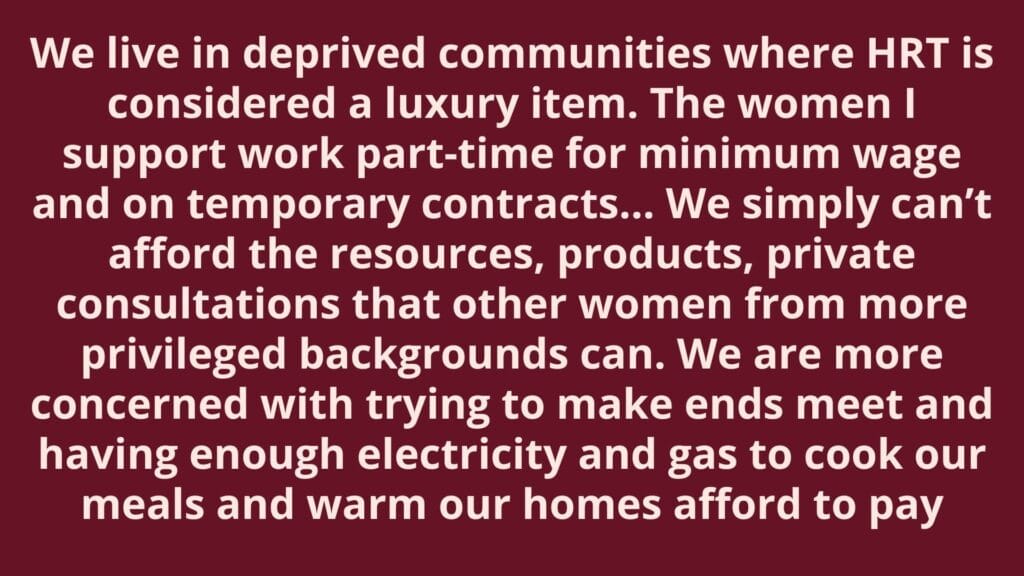
This is part of an email I received from a woman living and working in the north-east of England and perfectly describes how class impacts menopause. Working-class women face a double whammy: the challenges of menopause and the inequalities they live with every day. Recognising and fighting this is the only way we can pave the way for a fairer, healthier society where no woman is left behind.
This requires all of us working together. Politicians must prioritise funding for healthcare and social services in deprived areas; employers of all size businesses need to protect and support their menopausal staff, and advocacy groups, trade unions and grassroots organisations must amplify the voices of working-class women. It’s time to let them speak for themselves and be heard.
Menopause will never be a one-size-fits-all experience, but we can make sure every woman can get through it with dignity, support and respect – regardless of their class.