How Menopause Care Is Failing Women in the UK – and What Needs to Change
Menopause increases the risk of osteoporosis, heart disease and mental health struggles, so why is the UK treating it as a standalone issue?
I’ve been thinking a lot about the future in the never-ending month that is January. Maybe it’s because it’s the start of a new year, with all that brings with it, or maybe it’s because I’m moving home (and am currently drowning in boxes and DIY plans). But I think it’s more likely because I’ve been reconnecting with the menopause world again and got frustrated that society still thinks menopause is all about hot flushes and brain fog when the truth is: it’s all about long-term health.
Menopause is about what happens next.
I’ve long known about the links between menopause and endometriosis – how some women go through a temporary menopause to get relief from symptoms, dealing with one set of hormone hell only to be thrown into another – thanks to the brilliant Vicky Chapman, who runs the Endometriosis UK Dundee Support Group. That’s one of my arguments as to why we need to be taught about menopause as soon as we start our periods. And taught properly!
But some of the conversations I’ve had this month really got me thinking about how menopause is connected to so many other health conditions.
How menopause affects your body
Osteoporosis: Oestrogen keeps our bone density stable so when menopause comes along, we lose that. In fact, women lose on average around 10% of their bone mass in the first five years, which increases the risk of osteoporosis – and that’s not good. According to the National Osteoporosis Society, 50% of women over the age of 50 will break a bone due to osteoporosis. It’s not just broken bones, though; fractures in older people can lead to depression and anxiety. For some, this spirals so they don’t even want to leave the house, “just in case”, and so cut off their social life, adding to the depression.
State of Her is a reader-supported publication. To receive new posts and support my work, consider becoming a free or paid subscriber.
Cardiovascular Disease: The risk of heart disease also rises significantly after menopause, with the British Heart Foundation finding that post-menopausal women are more likely to develop cardiovascular disease than those yet to go through menopause. Once again, this is due, in part, to a drop in oestrogen, which helps control your cholesterol levels, reduces the risk of fat building up in your arteries and keeps your blood vessels healthy. Women are twice as likely to die of coronary heart disease in the UK as breast cancer , but we’re not getting the right preventative care – mainly because it’s seen as a “man’s disease“.
Mental Health: This is my biggest bugbear. A few years ago, I went through every mental-health charity’s website to see how many mentions there were of menopause. You know the rest – there were hardly any, leading me to get Mental Health UK to introduce it for the first time on their site. Menopause can take a huge toll on our mental wellbeing. One study found a 30% increase in major depression during this time, along with a rise in bipolar disorder. Again, this is due to hormonal fluctuations – but we can also add in the physical, emotional and societal toll, too. But how many of us have been told we’re “depressed” and it has nothing to do with menopause? My hand is up, that’s for sure.
These are just three ways menopause impacts our overall health system, but the UK’s current approach to menopause care is to view it as a single, standalone issue. As a result, they look at solving the problem of symptoms and ignore long-term conditions that can result from the lack of oestrogen, such as osteoporosis, cardiovascular disease and mental health.
HRT is only part of the answer
This does not mean I’m pushing HRT, by the way. I’m on it and it has helped me, but it isn’t right for everyone and nor can everyone use it. I’d also like to see more long-term studies about its efficacy in preventing these conditions, as touted by its famous supporters.
What can’t be argued with is that viewing menopause as part of a broader healthcare framework could lead to better preventative strategies, more comprehensive treatment plans and better outcomes for women. For example, menopause-related cardiovascular risks could be better managed if heart health were considered alongside other menopause symptoms. The same with bone health and mental health. They should all be part of the conversation.
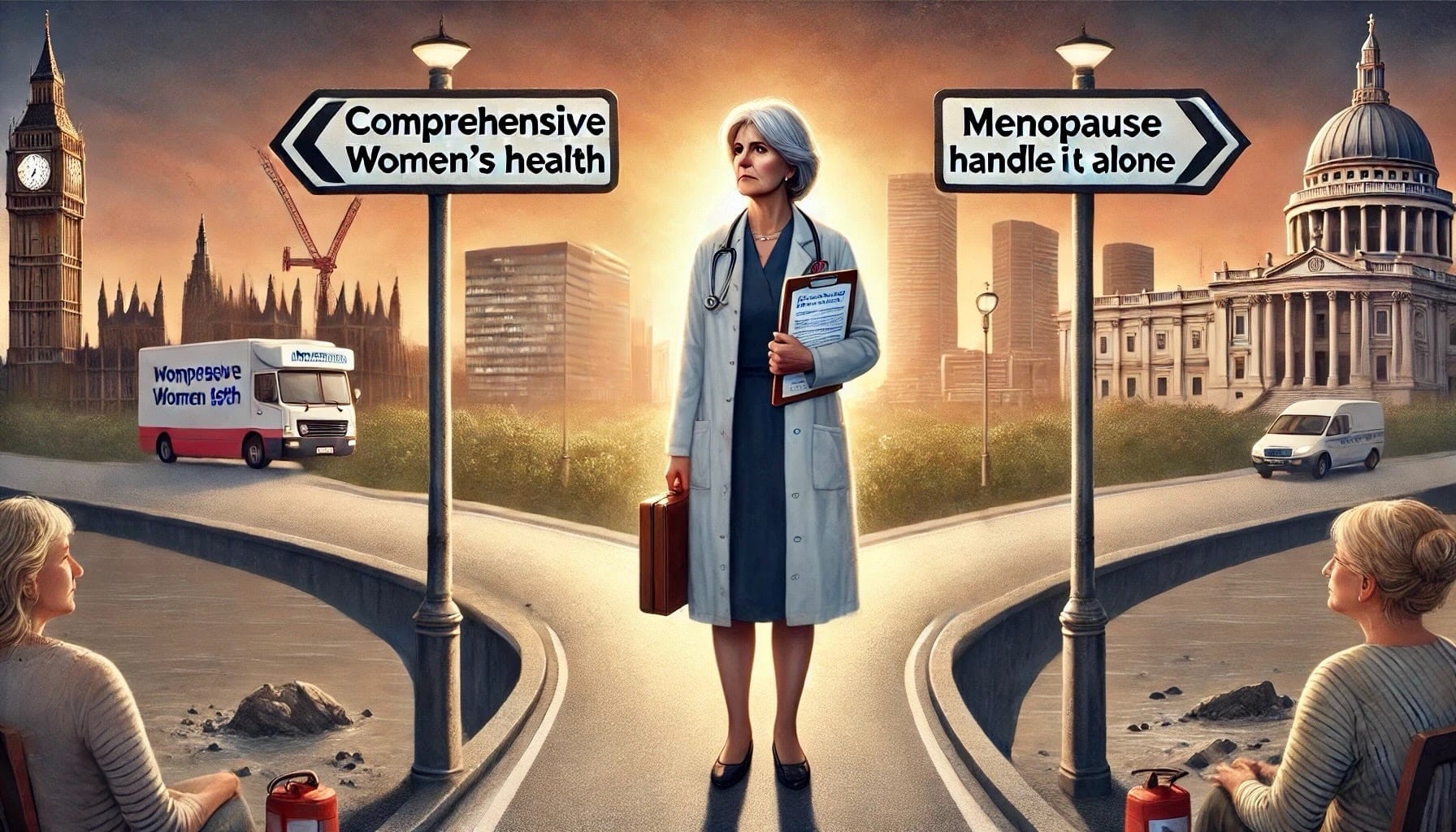
No, I’m not getting at GPs. NHS doctors have 10 minutes per appointment (less, in reality, as they have to read your notes and then write up the next). They simply don’t have the time to address everything around menopause. This is a policy failure. Women’s health needs to be addressed holistically, with menopause care as part of a range of broader strategies for chronic disease prevention, mental health and heart health. Doing this would mean we’re not left to navigate menopause alone and would have the right support for any osteoporosis, cardiovascular disease and mental health issues that arise.
Societal attitudes to menopause – something that happens when “you’re older” and you “just have to get on with it” – are part of the problem too. It’s time to stop looking at menopause in isolation and see it for what it is: a key lifestage with far-reaching consequences for women’s long-term health. Only then can we begin to truly support women through “the change” and ensure our health and wellbeing in the years beyond menopause.